
Jammu & Kashmir High Court Strikes Down Water Usage Charges on Hydropower Projects as Disguised Electricity Tax

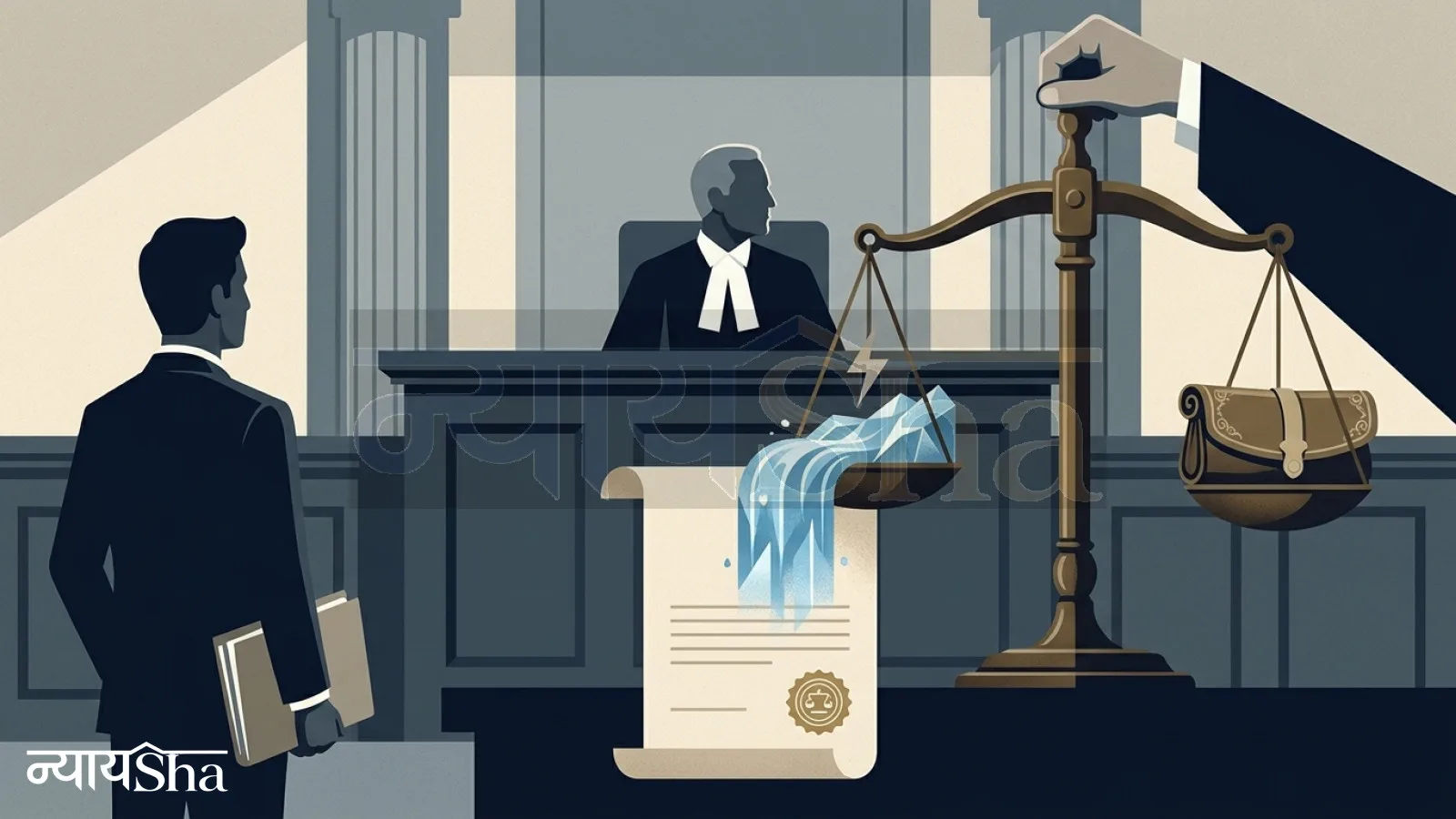
In a significant ruling affecting the hydropower sector in the Union Territory, the High Court of Jammu & Kashmir and Ladakh at Jammu has declared that water usage charges imposed on hydroelectric projects under state water resources legislation are, in effect, a tax on electricity generation—a subject beyond the legislative reach of the State Assembly.
A Division Bench comprising Justice Rajnesh Oswal and Justice Sanjay Dhar delivered the verdict while disposing of three connected writ petitions filed by independent power producers running river-based hydroelectric plants across the Union Territory.
The petitioners had challenged specific provisions of the Jammu and Kashmir Water Resources (Regulation and Management) Act, 2010, along with the rules framed under it in 2011, insofar as these provisions authorized the levy of water usage charges for power generation. They also contested demand notices issued against them under this framework.
Background of the Dispute
The companies involved had been allotted hydropower projects by the government and operate facilities that draw river water to generate electricity. Following enactment of the 2010 law and its accompanying rules, authorities began raising demands for water usage charges dating back to 2010, invoking Sections 120, 130, and 145(1)(d) of the Act.
The petitioners argued that these charges were nothing but a camouflaged tax on power generation, masquerading under the label of water usage fees—something the State Legislature had no constitutional authority to impose.
Their counsel pointed out that hydropower generation involves non-consumptive use of water—the water passes through turbines and flows back into the river system without being consumed. Significantly, they highlighted that the Water Resources Regulatory Authority had pegged usage charges to the head height from which water was channeled to drive turbines, rather than to the actual volume of water utilized—a detail they said exposed the charge's true nature as an electricity tax.
The petitioners further contended that existing contractual arrangements already required them to supply 12% free electricity to the government as royalty for water usage, making any additional charge both duplicative and estopped. They also invoked promissory estoppel, noting that the State's Hydro Power Policy made no mention of any such cess or usage charge.
Competing Positions
The Union of India sided substantially with the petitioners, asserting that the power to tax electricity generation never rested with state legislatures. According to the Centre, Entry 53 of List II of the Seventh Schedule only permits states to tax the consumption or sale of electricity—not its generation.
The Union Territory administration, however, defended the levy, arguing that Entry 17 of List II specifically covers water and water power, granting states authority to regulate water resources, including the power to charge for water usage.
Alternatively, the UT argued that water could be classified as falling within the ambit of "land" or "minerals," thereby justifying the charges under Entries 49 and 50 of the State List. It also contended that since the 2010 Act was later adopted by Parliament through the Jammu and Kashmir Reorganisation Act, 2019, it should be deemed to carry Parliamentary assent, curing any competence defect.
On the estoppel argument, the UT countered that no such doctrine can operate against legislative enactments.
Four Questions Before the Court
The Bench structured its analysis around four central questions: first, the true nature of the charges imposed; second, whether the levy targeted water drawal or electricity generation; third, whether the State Legislature possessed competence to enact such a provision; and fourth, whether the levy survived scrutiny under the constitutional scheme and the contractual agreements between the parties.
Distinguishing Tax from Usage Charge
The Court began by emphasizing that the label attached by a legislature to any levy cannot be treated as conclusive of its real character. Courts must examine the pith and substance of the legislation to uncover its true nature.
The Bench drew a clear line between a tax and a usage charge: a tax is a compulsory exaction levied for public purposes without any direct quid pro quo, whereas a usage charge represents consideration for a service rendered or a resource supplied, with a discernible correlation between the amount collected and the service provided.
Examining the statutory scheme, the judges noted that the proviso to Section 145(1) of the Act envisages water usage charges as a mechanism to recover costs incurred on projects along with expenses for their operation, maintenance, and management. However, in the case of hydropower projects, neither the Union Territory nor its agencies bear any responsibility for operating, maintaining, or managing such plants—undercutting the rationale for treating the charge as a genuine usage fee.
The Court also scrutinized Section 185-A of the Act, which establishes a dedicated fund for depositing amounts collected as water usage charges from hydroelectric projects. This fund, the provision states, is earmarked for setting up new hydel projects, buying back existing hydroelectric facilities, capital investment in transmission and distribution infrastructure, and power purchases by the State Government.
The Bench found this entire fund structure telling—it revealed that the charges were not being used to recompense any service rendered to the power producers but were instead being channeled into broader government objectives, a hallmark of taxation rather than fee collection.
Water Usage Is Non-Consumptive
Turning to the second issue, the Court accepted the petitioners' technical submission regarding the mechanics of conventional hydropower generation. Water is drawn, passed through turbines to generate electricity, and then released back into the river—constituting a non-consumptive use of the resource.
Critically, the judges noted that the tariff structure fixed by the Regulatory Authority was tied to head height—the rate per cubic metre rose in direct proportion to the height from which water was released to drive the turbines. This method of calculation, divorced from the actual quantity of water consumed or supplied, led the Court to conclude that the charge was functionally indistinguishable from a tax on the quantum of electricity generated, since higher head heights typically correspond to greater power output.
Legislative Competence Under Scrutiny
On the pivotal question of legislative competence, the Court traced the constitutional history of Jammu and Kashmir, noting that the 2010 Act was enacted when the erstwhile State enjoyed special status under Article 370. At that time, barring subjects falling exclusively within Parliament's domain under the Seventh Schedule entries applicable to the State, residuary legislative powers vested with the State Legislature itself.
The Bench reiterated the settled principle that legislative competence must always be examined against the constitutional and statutory framework prevailing at the time of enactment.
Citing the nine-Judge Bench ruling of the Supreme Court in Mineral Area Development Authority and another v. Steel Authority of India and another (2024), the Court recalled that the structure of legislative entries in the Constitution follows a deliberate pattern—general subject-matter entries are kept distinct from taxing entries, with taxation treated as a separate and independent matter for competence purposes.
Applying this framework, the Bench observed that while Entry 53 of List II empowers states to tax the consumption or sale of electricity, no corresponding entry in the State List confers power to tax the generation of electricity.
The judges relied on established precedent—Commissioner of Sales Tax, Madhya Pradesh v. Madhya Pradesh Electricity Board (1969) and State of Andhra Pradesh v. National Thermal Power Corporation Ltd. (2002)—both of which recognize electricity as "goods" and establish that its generation, transmission, delivery, and consumption occur virtually simultaneously.
Further reliance was placed on M.P. Cements Manufacturers Association v. State of Madhya Pradesh (2004), which held that exclusive legislative competence over duties on electricity production rests with Parliament. The Bench also invoked its own earlier Division Bench ruling in National Hydro-Electric Power Corp. Ltd. and another v. State of J&K and others (2005), which had quashed a state notification (SRO) imposing electricity duty on generation, precisely on grounds that the erstwhile State lacked legislative competence for such a levy.
Rejecting the "Water as Land/Mineral" Argument
The Court dismissed the Union Territory's alternative plea that water usage charges could be justified under Entries 49 and 50 of the State List (relating to land and minerals, respectively). The Bench pointed out that the Constitution itself treats water as a distinct subject under Entry 17 of List II, separate from land (covered under Entry 18, with its taxing counterpart Entry 49) and minerals (Entry 50). Significantly, the State List contains no taxing entry corresponding to water, reinforcing that states cannot levy charges on water usage dressed up as a tax.
No Retrospective Validation Through Reorganisation Act
Addressing the Union Territory's argument that adoption of the 2010 Act via the Jammu and Kashmir Reorganisation Act, 2019 cured any competence defect by implying Parliamentary assent, the Court firmly rejected this proposition. Mere adoption of pre-existing state laws under the Reorganisation Act does not transform them into Parliamentary enactments, the Bench clarified, warning that accepting such reasoning would lead to absurd consequences.
In support, the Court cited the Supreme Court's rulings in Deep Chand v. State of U.P. (1959) and Krishna Chandra Gangopadhyay v. Union of India (1975).
Final Verdict
Weighing all four issues together, the Bench concluded that the water usage charges imposed on hydropower projects under the 2010 Act were, in substance, a tax on electricity generation—a levy the State Legislature had no constitutional competence to impose.
Consequently, the Court struck down the impugned provisions of the Act to the extent they authorize water usage charges on hydropower generation, declaring them ultra vires the Constitution.
All demand notices issued to the petitioner companies were quashed. The Court additionally restrained the State from imposing any tax on electricity generation in future, whether disguised as water usage charges or under any other nomenclature.
The ruling is likely to have significant financial implications for hydropower producers operating in the Union Territory and may prompt a broader re-examination of similar levies in other states with river-based power projects.
Follow Nyaysha
Fresh legal updates across our platforms — follow wherever you already scroll.
LinkedInJudgments, appointments & career moves — for professionals Follow Instagram@nyaysha.in — visual explainers, reels & court-room snapshots Follow FacebookCommunity discussions & week-in-review roundups Follow TelegramLegal jobs, internships, moot courts, competitions, events & call for papers — instant alerts, first to know Join