
Delhi HC: Sellers Cannot Keep Buyer's Advance Without Proving Actual Loss From Cancelled Deal

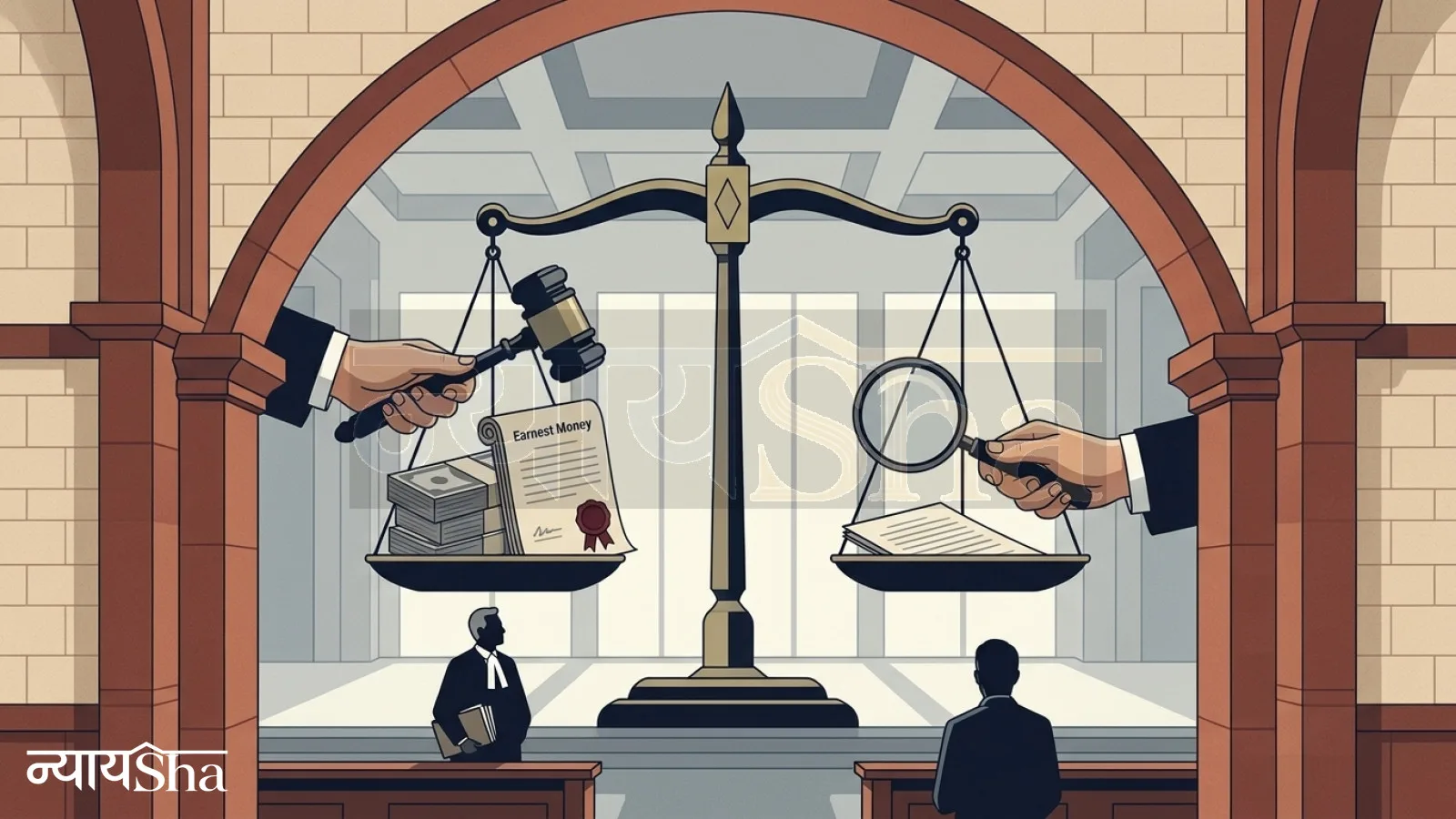
The Delhi High Court has ruled that a seller cannot automatically retain earnest money paid under a property sale agreement simply because the buyer defaulted, and must instead demonstrate the actual financial loss suffered as a result of the breach.
Justice Neena Bansal Krishna delivered the ruling while rejecting an appeal brought by the legal heirs of two sellers, now deceased, who were contesting a trial court's direction to return ₹4 lakh in earnest money to a buyer who had backed out of a property purchase.
The judge observed that forfeiting earnest money is not a mechanical outcome of a broken contract. According to the Court, the figure mentioned in an agreement only sets the maximum ceiling for compensation — whoever wants to hold onto that money must show that they actually suffered a legal injury because of the breach, and if that loss can be quantified through evidence, it needs to be formally proven.
Background of the dispute
The matter stemmed from an agreement to sell dated June 21, 2008, concerning a property located in Ramesh Nagar, Delhi, with a total sale price fixed at ₹40 lakh. The prospective buyer had handed over ₹4 lakh as token/earnest money, with the remaining ₹36 lakh due by September 5, 2008.
The contract contained a mutual penalty clause — if the buyer walked away from the deal, the earnest money would be forfeited, but if the sellers reneged, they would owe the buyer double the earnest amount.
Eventually, the buyer moved to recover ₹8 lakh, claiming the sellers never furnished property title documents for her verification, which prevented the sale from going through. The sellers, in turn, argued that it was the buyer who failed to pay the outstanding balance, entitling them to forfeit her deposit.
The sellers additionally claimed they had suffered a financial setback after a separate property deal they were pursuing collapsed, resulting in forfeiture of ₹4.60 lakh they themselves had paid as earnest money in that unrelated transaction.
Trial court's findings and appeal
The trial court turned down the buyer's demand for double the earnest money but ordered the sellers to return the original ₹4 lakh, plus interest. Unhappy with this outcome, the sellers' legal representatives took the matter to the High Court.
High Court's reasoning
Examining Section 74 of the Indian Contract Act, 1872, which deals with awarding reasonable compensation when a contract specifies a sum payable upon breach or includes a penalty clause, the High Court reaffirmed settled legal principles.
Citing the Supreme Court's rulings in Fateh Chand v. Balkishan Das and Kailash Nath Associates v. Delhi Development Authority, Justice Krishna emphasized that a sum named in a contract does not become recoverable in full purely because a breach took place — proof of genuine loss remains essential.
In this case, the sellers' claim about losing ₹4.60 lakh on another deal fell apart evidentially, since the supporting receipt and agreement were de-exhibited after they could not produce the original documents in court.
The bench pointed out that beyond this, there was no credible evidence — documentary or testimonial — establishing either the existence of that other transaction or why it had failed. The sellers could easily have produced records or had the other seller testify, but chose not to, leading the Court to conclude they had not proven their claimed loss.
Given this failure of proof, the High Court held that the trial court had rightly ordered the refund, and consequently dismissed the sellers' appeal.
Follow Nyaysha
Fresh legal updates across our platforms — follow wherever you already scroll.
LinkedInJudgments, appointments & career moves — for professionals Follow Instagram@nyaysha.in — visual explainers, reels & court-room snapshots Follow FacebookCommunity discussions & week-in-review roundups Follow TelegramLegal jobs, internships, moot courts, competitions, events & call for papers — instant alerts, first to know Join